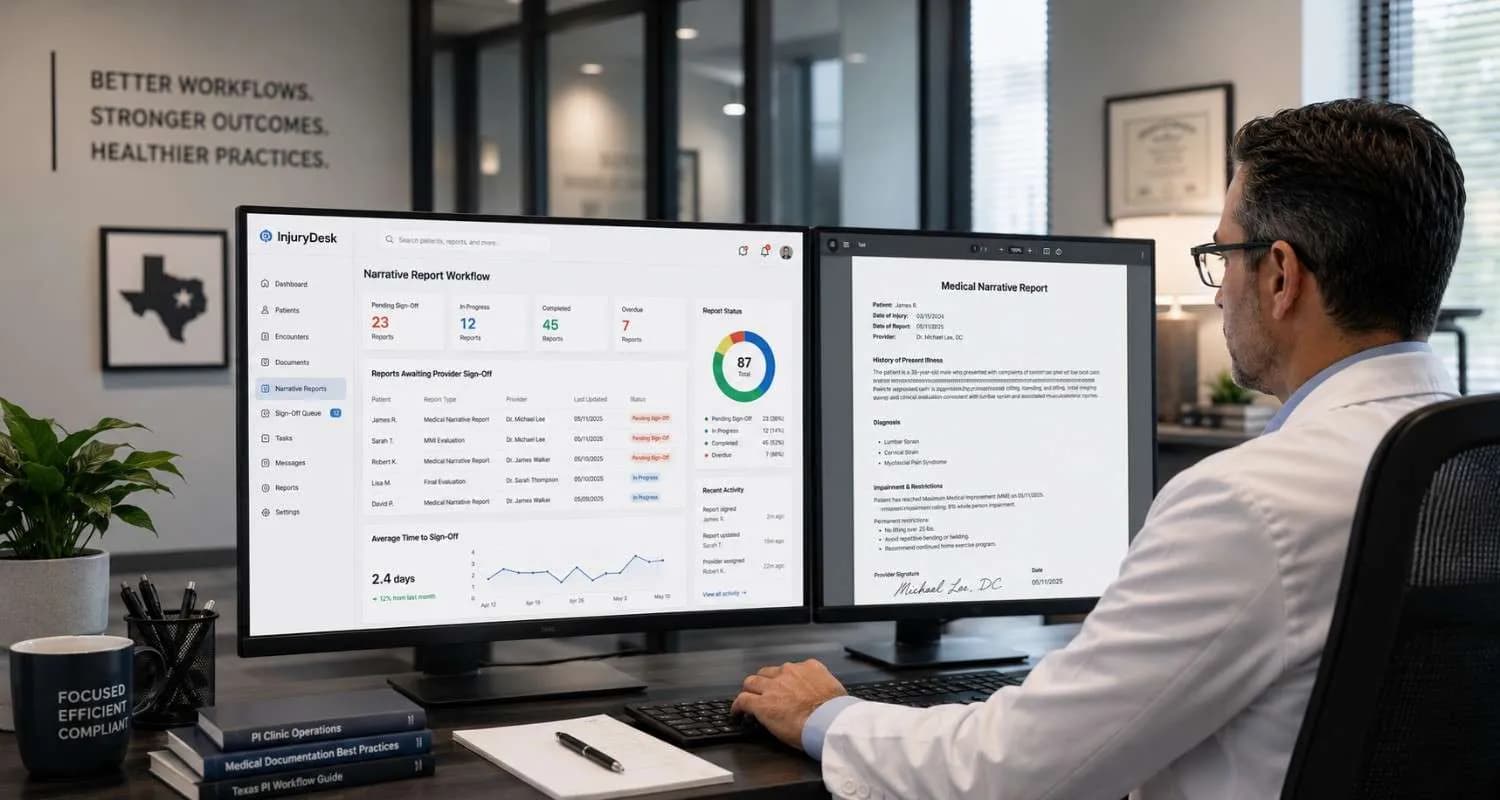

Modern PI clinics that handle personal injury cases on a letter of protection basis can't afford a paper-based, reactive process. A functional letter of protection workflow PI clinic process in 2026 runs on centralized tracking, automated document generation, and real-time attorney communication — cutting billing delays by weeks, not days.
Why Most PI Clinic LOP Workflows Break Down
The LOP model is operationally demanding. A clinic agrees to defer payment until a personal injury case settles, which means revenue is tied to case timelines outside the clinic's direct control. That creates compounding risk when the internal process isn't airtight.
Most breakdowns happen in predictable places:
- LOP documents are generated manually, stored inconsistently, and difficult to retrieve when attorneys request updates
- Staff track case status in spreadsheets that go stale within days
- Billing teams can't confirm which accounts are LOP-protected versus standard insurance without digging through paper files
- Attorneys receive slow or incomplete responses, which erodes the referral relationship
A 2024 survey by the Medical Group Management Association found that administrative inefficiency is the top operational complaint among specialty clinics — and PI clinics face this at scale because every LOP case carries compounding timeline risk.
The solution isn't hiring more administrative staff. It's redesigning the workflow from intake through settlement.
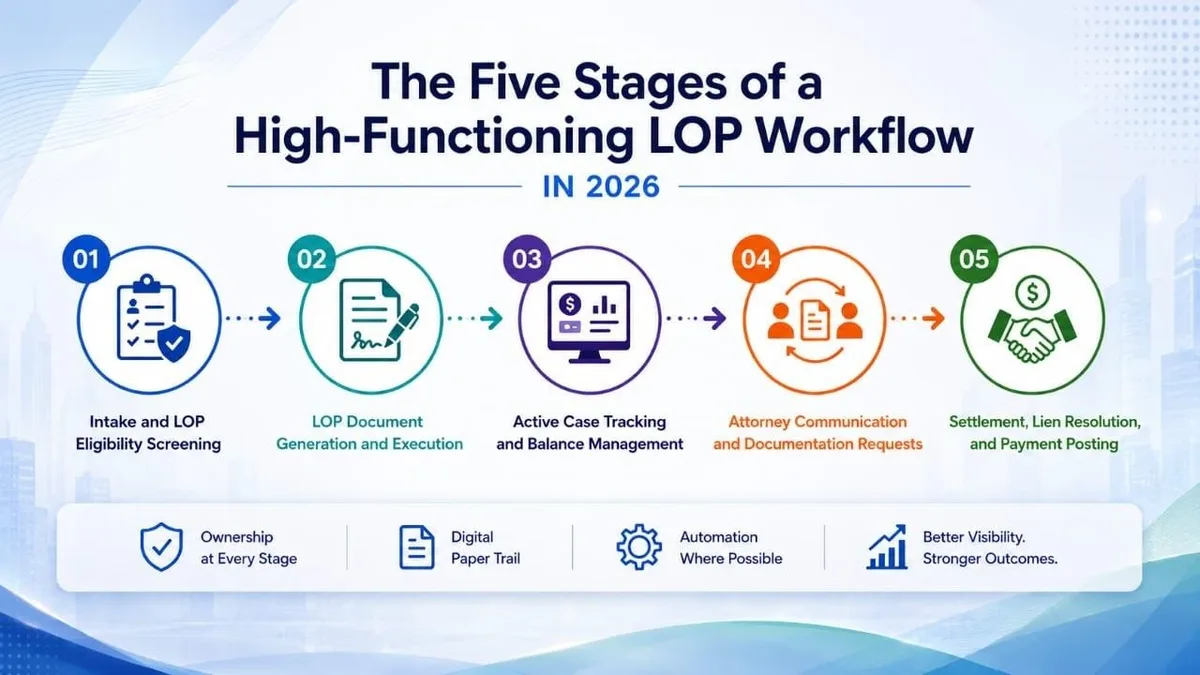
The Five Stages of a High-Functioning LOP Workflow in 2026
A well-built letter of protection workflow for a PI clinic moves through five distinct stages. Each stage should have defined ownership, a digital paper trail, and — where possible — automation.
Stage 1: Intake and LOP Eligibility Screening
Before an LOP is issued, the clinic needs to verify that the case qualifies. That means confirming the patient has active legal representation, the attorney has accepted the case, and the injury is consistent with the claimed accident mechanism.
In 2026, this screening should happen through a structured intake form that feeds directly into the clinic's case management system. No manual data re-entry. The intake triggers an automatic eligibility checklist, and the front desk team gets a notification when a case is ready for LOP review — not when someone remembers to follow up.
Stage 2: LOP Document Generation and Execution
This is where most clinics still lose hours every week. A staff member pulls a template, fills in patient and attorney details, exports a PDF, emails it to the attorney's office, and then waits. If the attorney requests changes, the cycle repeats.
Demand letter automation tools apply the same logic to LOP generation: the document populates automatically from the intake data, routes to the attorney via a secure portal, and captures the executed version back into the patient's file. What used to take two to three days of back-and-forth compresses to hours.
Stage 3: Active Case Tracking and Balance Management
Once an LOP is in place, the clinic carries that balance until settlement. The risk is invisible debt — accounts that look active but are stalled because the case is in litigation limbo.
Centralized LOP tracking gives billing teams a live view of every open LOP account: outstanding balance, last attorney contact date, estimated settlement window, and any flags for cases that have gone quiet. This replaces the spreadsheet that's always three weeks behind.
Automated aging alerts are particularly valuable here. When an LOP account crosses 90, 120, or 180 days without a settlement update, the system flags it for outreach — rather than the billing team discovering the issue during a quarterly audit.
Stage 4: Attorney Communication and Documentation Requests
Attorneys need regular updates on treatment progress, and clinics need attorneys to communicate settlement timelines. In most PI clinics, this relationship is managed through a combination of phone calls, individual emails, and faxes — all of which create documentation gaps.
Seamless attorney communication platforms centralize this exchange. Records requests, treatment summaries, and billing statements go out through a shared portal. The attorney's office can pull documents without calling the front desk. The clinic has a timestamped log of every communication if a dispute arises at settlement.
This matters more than it might seem. When a case settles and the attorney's office is negotiating the medical lien, having a clean documentation trail — with every record request fulfilled promptly and every balance updated in real time — gives the clinic leverage. Disorganized clinics get lower lien settlements because attorneys know the billing records are unreliable.
Stage 5: Settlement, Lien Resolution, and Payment Posting
The final stage is where the revenue actually arrives. But it's also where operational gaps cause write-offs. If the clinic's balance records don't match what the attorney's office has on file, the negotiation starts from a disputed baseline.
A well-designed workflow closes this gap by maintaining a single source of truth for every LOP balance — one that both the clinic's billing team and the attorney's office can reference. When the settlement check arrives, the payment posts automatically against the correct account, the LOP is marked resolved, and the case closes in the system.
For clinics managing dozens of active LOP cases simultaneously, custom clinic web dashboards provide the operational visibility to run this process without a dedicated full-time coordinator for every ten cases.
What Automation Actually Changes in a PI Clinic's LOP Process
Automation in an LOP workflow isn't about replacing clinical judgment — it's about removing the manual coordination work that doesn't require clinical judgment. Consider what a typical LOP coordinator does in a manual environment:
- Drafts and sends LOP documents: 45–90 minutes per case
- Follows up with attorneys for signatures: 30–60 minutes per case, often multiple rounds
- Updates case status in the tracking spreadsheet: 15–20 minutes per case per week
- Responds to records requests from attorneys: 20–40 minutes per request
- Prepares settlement documentation: 60–120 minutes per case
Across a clinic handling 50 active LOP cases, that's a meaningful portion of a full-time employee's week — on administrative coordination alone. Automation doesn't eliminate that role, but it redirects it. The coordinator moves from generating documents to reviewing exceptions, from chasing signatures to managing escalations.
According to HubSpot's 2024 State of Service Report, organizations that automate routine communication workflows report a 30% reduction in response time and measurable improvement in client satisfaction scores. For PI clinics, "client satisfaction" includes the attorneys who refer cases — and referral relationships are directly tied to how efficiently a clinic handles the administrative side of LOP.
The clinics that are building competitive advantage in 2026 aren't necessarily the ones with the best clinical outcomes alone. They're the ones where attorneys know their records requests get answered within 24 hours, their LOP balances are always accurate, and settlement documentation is ready when the case closes.
The Role of Mobile Access in 2026 LOP Management
One shift that's accelerated significantly is the expectation of on-the-go access. Clinic administrators, billing managers, and even attorneys are making decisions from mobile devices. A workflow that requires someone to be at a desktop to check case status or approve a document creates unnecessary bottlenecks.
Mobile case management apps built for PI clinic operations allow administrators to review LOP account status, approve outgoing communications, and flag escalations from anywhere. For multi-location clinics especially, this removes the dependency on a single office-based coordinator.
This isn't a luxury feature in 2026 — it's table stakes for any clinic managing more than 20 active LOP cases.
What a PI Clinic Should Audit Right Now
If you're evaluating your current LOP workflow, start with these four questions:
- How long does it take from a patient's first appointment to an executed LOP document in the attorney's hands?
- Can your billing team pull a real-time list of every open LOP account with current balances and last attorney contact date — in under two minutes?
- Do you have a documented process for flagging stalled cases before they hit 180 days?
- When an attorney requests records, what's your average response time, and is it logged anywhere?
If any of those questions reveal a gap, that's where the workflow redesign starts. According to Moz's analysis of healthcare service content performance, clinics that document and systematize their operational processes also tend to build stronger online authority — because the same discipline that produces good internal documentation produces good external content. The operational and marketing benefits reinforce each other.
Related reading
Next step
See how Synectus closes the handoff after the lead arrives.
If this article describes the exact gap inside your clinic, go one layer deeper into the service stack or book a direct strategy call with Synectus.