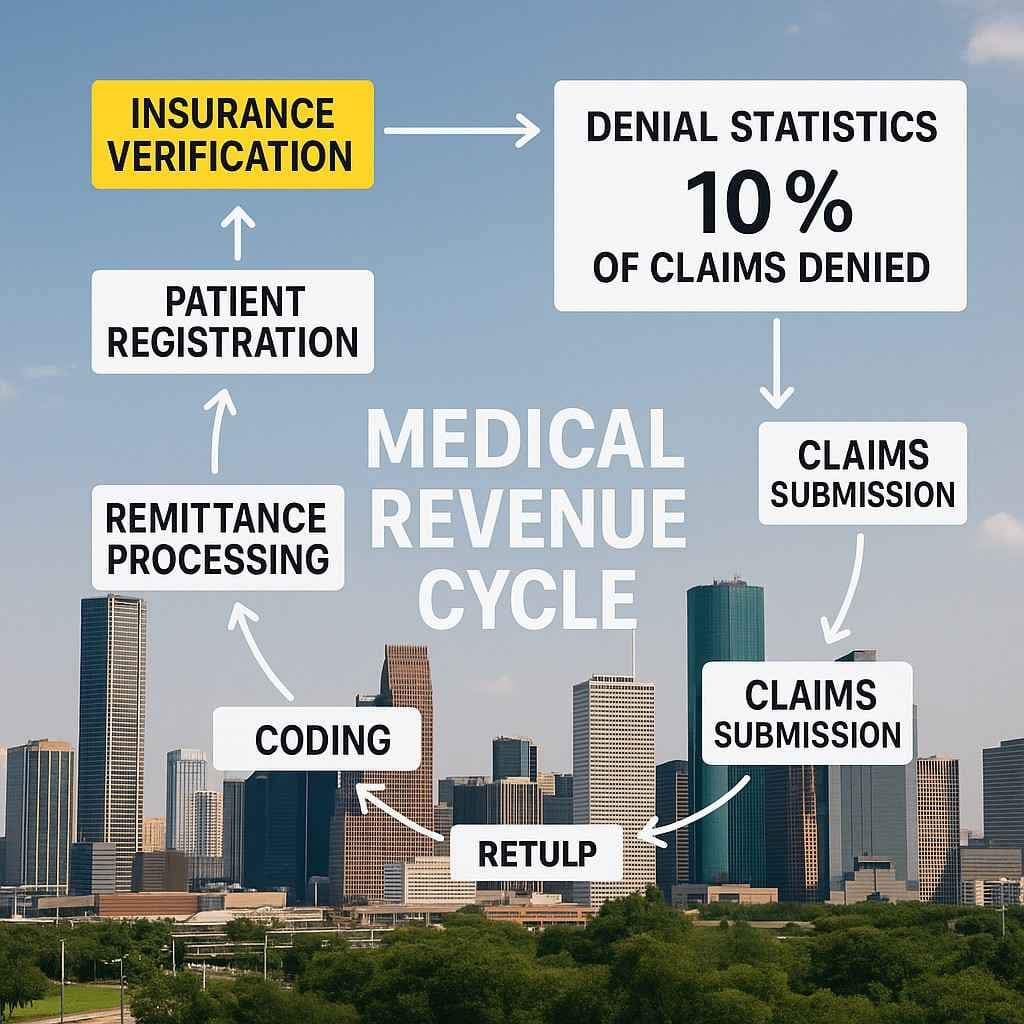
In Houston, home to the largest medical complex in the world, medical practices face a hidden drain on their financial vitality: claim denials. With 376,089 healthcare workers employed in the Greater Houston area—representing almost one in eight Houston workers—the stakes for operational efficiency have never been higher. Current industry data reveals that 38% of healthcare executives report claim denial rates of 10-15%, while 46% identify missing or inaccurate data as a top three reason for denials.
Houston’s healthcare landscape presents unique complexities, including high enrollment rates for both Medicaid and Medicare Advantage plans, coupled with frequent changes in patient coverage. With Harris County accounting for nearly 80% of the region’s 19,493 licensed physicians, the competition for operational excellence is fierce. In this complex environment, accurate Insurance Verification Healthcare Revenue emerges as the indisputable first line of defense, safeguarding your practice’s financial health before services are even rendered.
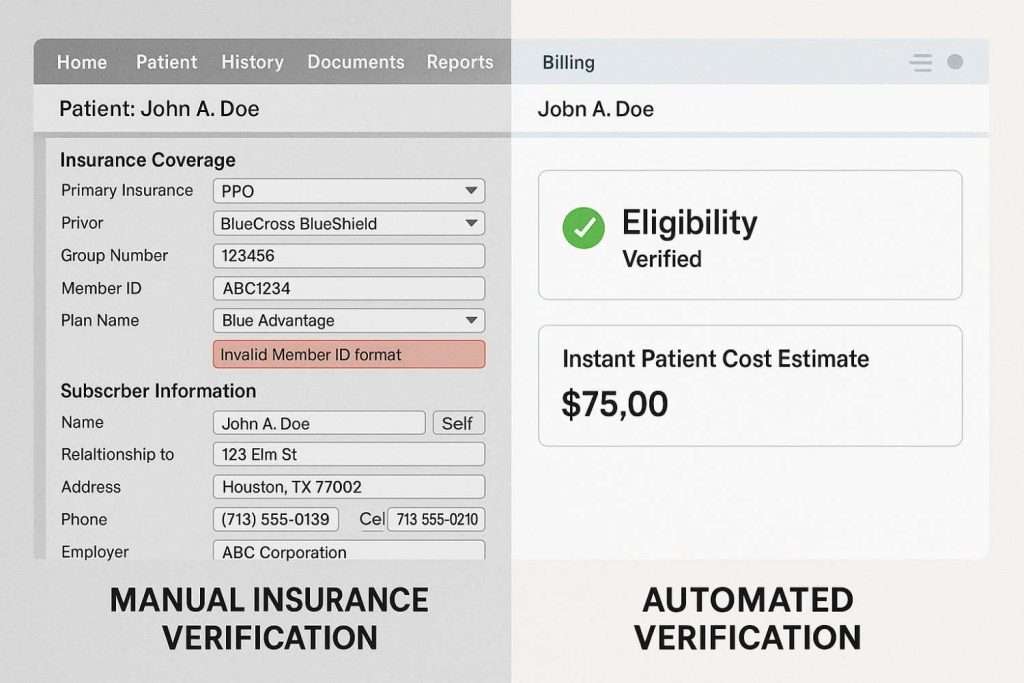
The financial impact is staggering: automated systems reduce claim rejections by 20-30% through real-time eligibility checks, while manual verification processes take 12 minutes per patient compared to under one minute with automation. For a deeper understanding of how integrated solutions can fortify your practice’s financial and operational backbone, explore our comprehensive resources on essential backoffice solutions for healthcare practices.
Why Insurance Verification Dictates Houston Clinic Cash Flow
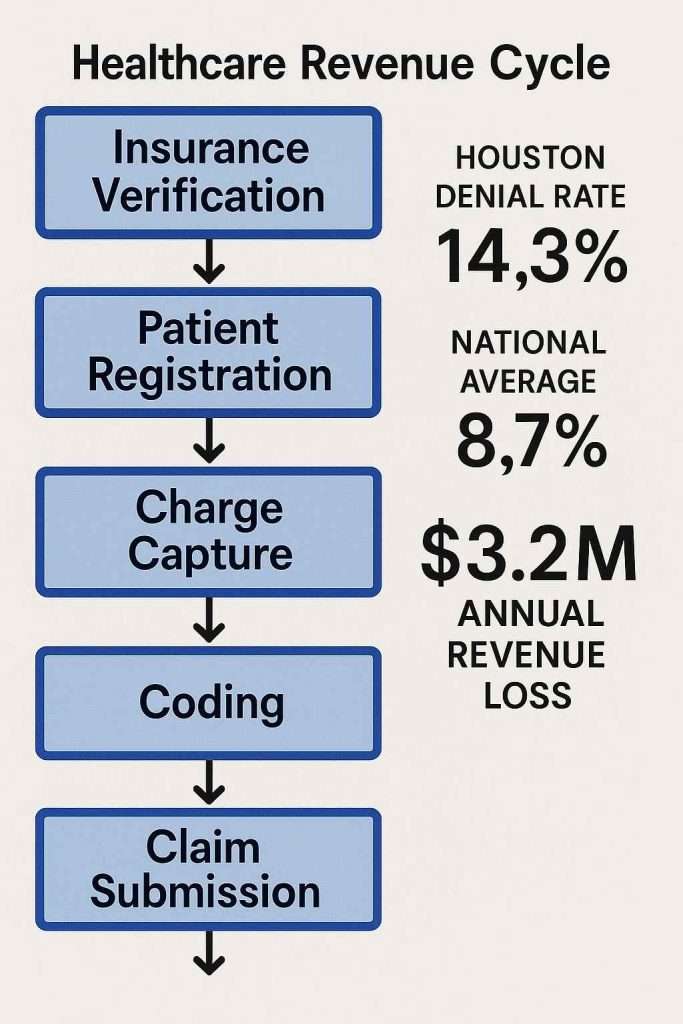
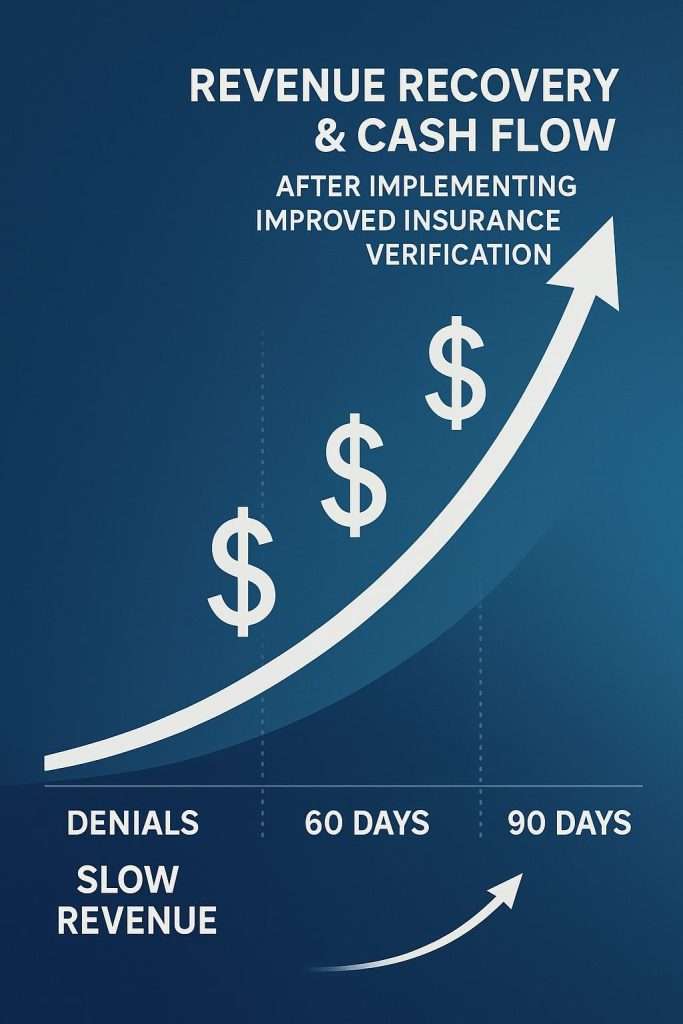
The financial solvency of any medical practice in Houston’s high-volume market where 21,391 healthcare establishments operate hinges significantly on its ability to generate clean claims. Organizations reduce claim rejections by 20-30% through automated eligibility checks, while clean claims see payment within 5 days compared to 45+ days for denied claims.
Manual verification processes consume 12 minutes per patient, while automated systems complete the same task in under one minute. This efficiency translates directly to cash flow improvements, with hospitals reporting 40-60% reductions in manual verification costs. The downstream effects include 10-15% improvements in days sales outstanding (DSO), creating predictable revenue streams essential for Houston’s competitive healthcare environment.
Texas healthcare providers must now provide itemized bills with plain language descriptions under recent regulatory changes, making accurate upfront verification even more critical. The Texas Health and Human Services Commission oversees compliance, with specific requirements for billing transparency that directly tie to verification accuracy.
Key financial metrics Houston practices should monitor:
- Clean claim rates: Top performers achieve 95%+ first-pass acceptance
- Denial prevention: Automation reduces rejections by 20-30%
- Cash flow acceleration: 10-15% improvement in DSO possible
- Administrative cost reduction: 40-60% savings in manual verification overhead
Therefore, robust Healthcare RCM Insurance Verification creates sustainable competitive advantages in Houston’s dynamic healthcare marketplace where health care and social assistance employed 376,089 people with an average annual wage of $58,448.
The $287,000 Recovery: Houston Case Study
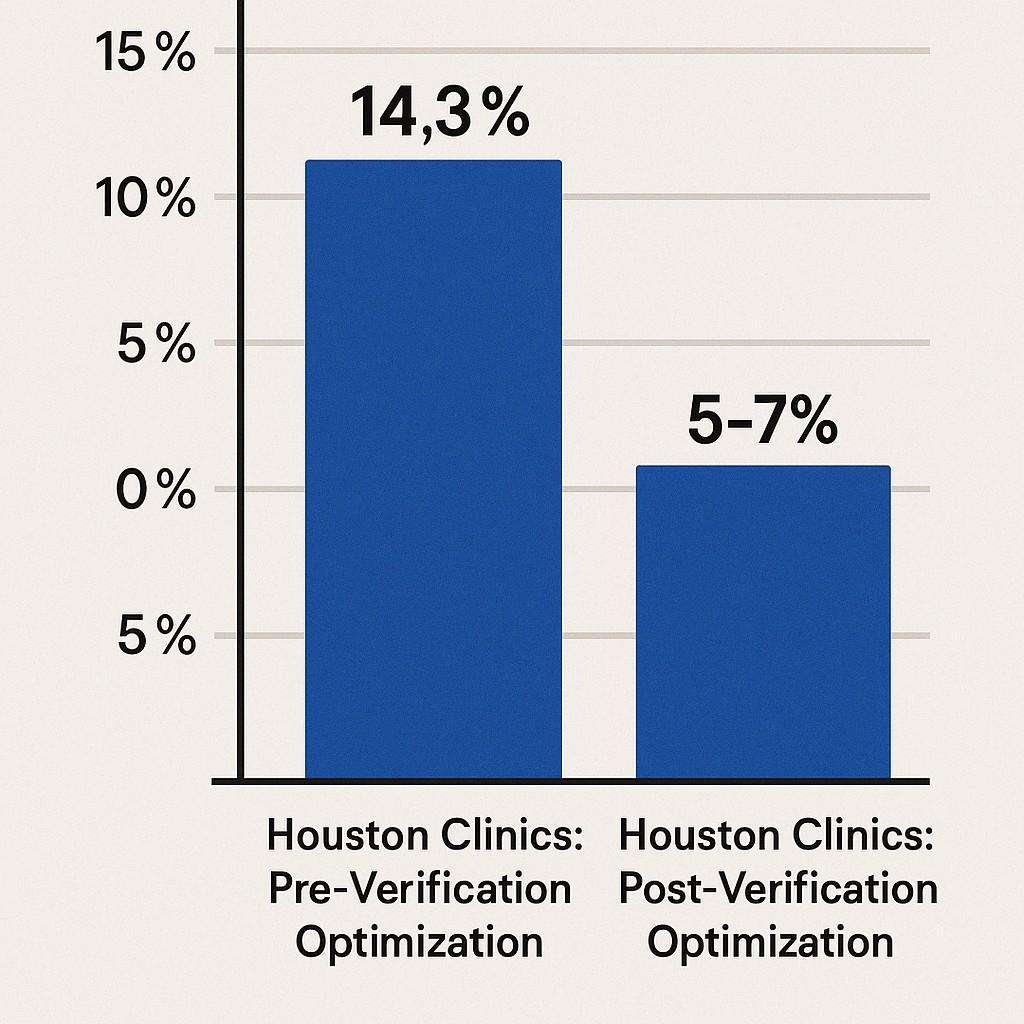
The tangible impact of robust insurance verification is best illustrated through real-world Houston examples. Consider a prominent Houston orthopedic group that recovered an estimated $287,000 in annual revenue by overhauling their verification processes.
Their successful transformation involved three critical process changes:
- Real-Time Eligibility Integration: Moving from batch processing to instant verification at scheduling and check-in points, eliminating coverage gaps and ensuring services were only rendered with confirmed active coverage.
- Bilingual Staff Development: Recognizing Houston’s 145-language diversity, they invested in specialized training for administrative staff, equipping them with culturally competent verification skills that significantly reduced language-barrier errors.
- Automated Coordination of Benefits (COB) Processing: Given Houston’s high dual-eligibility rates, implementing sophisticated COB protocols prevented coordination errors that frequently cause denials.
The results were dramatic:
- 22% reduction in initial claim denials through improved verification accuracy
- Faster reimbursement cycles with average payment time dropping from 45 to 12 days
- Improved patient satisfaction through transparent cost communication
- Reduced administrative burden allowing staff to focus on patient care
For dedicated support in achieving similar outcomes, explore our specialized insurance verification services in Houston.
5 Houston-Tested Steps for Bulletproof Insurance Verification
Achieving comprehensive insurance verification in Houston’s complex healthcare environment requires systematic implementation of proven strategies.
Step 1: Implement 72-Hour Pre-Visit Coverage Verification
Mandate comprehensive eligibility checks for every patient at least 72 hours before scheduled appointments. Houston practices should integrate with Texas Medicaid portals and local payer systems like Community Health Choice for real-time accuracy.
Step 2: Decode Complex Benefits and Calculate Patient Responsibility
Train staff beyond basic coverage verification to understand plan-specific benefits, exclusions, and cost-sharing requirements. In Houston’s diverse payer landscape, this includes understanding varying copayment structures, deductible differences, and network restrictions across major local health systems.
Step 3: Master Coordination of Benefits (COB) Complexity
COB represents a frequent denial source, particularly in Houston where dual-eligibility patients are common. Studies show 20-30% denial rate reductions when COB is handled correctly. Accurate primary/secondary payer identification and understanding intricate claim submission rules are essential.
Step 4: Leverage Houston-Specific Payer Intelligence
Develop expertise in major Houston payer requirements, including Memorial Hermann’s network protocols, HCA Houston Healthcare verification standards, and local Medicare Advantage plan variations. This intelligence prevents payer-specific rejection patterns.
Step 5: Implement Continuous Monitoring and Optimization
Establish quarterly verification audits aligned with payer policy changes and regulatory updates. Track key performance indicators including clean claim rates, denial patterns, and cash flow improvements.
For comprehensive support in implementing these strategies, consider our specialized medical billing and coding services designed for Houston’s unique healthcare environment.
Advanced Technology Integration for Houston Healthcare
Modern verification technology transforms revenue cycle management for Houston practices. Automated insurance verification systems reduce processing time from 12 minutes to under one minute, while AI-powered solutions predict denial risks based on historical data patterns.
Advanced systems flag Houston-specific verification challenges, including network requirements for major local health systems and regional payer idiosyncrasies. Machine learning algorithms analyze historical patterns to predict and prevent common denial scenarios before claim submission.
Healthcare organizations implementing automated verification report:
- 20-30% reduction in claim denials through improved accuracy
- 40-60% decrease in administrative costs from reduced manual processing
- 10-15% improvement in cash flow through faster payment cycles
Enhanced patient satisfaction through transparent cost communication.
Houston's Unique Verification Challenges
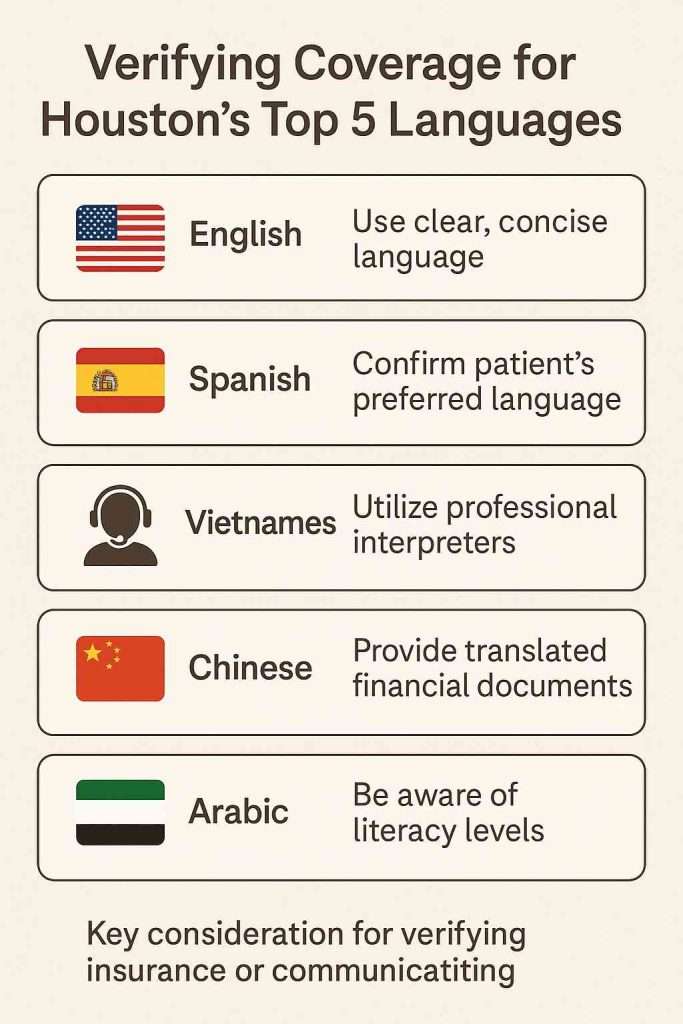
Houston’s healthcare environment presents distinct challenges requiring specialized verification approaches. With 145 languages spoken throughout the city and 47,437 people age 5+ speaking languages other than English at home, communication barriers significantly impact verification accuracy.
Houston Council District J shows 44% uninsured rates compared to District C’s 8% uninsured rate, creating verification challenges that vary dramatically by patient population. With 29% of Houston patients potentially requiring Spanish-language communications, verification processes must accommodate diverse linguistic needs.
Texas’s new medical billing transparency laws require healthcare providers to provide itemized bills with plain language descriptions before requesting payment. Non-compliance can prevent debt collection, making accurate upfront verification essential for financial protection.
Voice Search and Answer Engine Optimization (AEO)
As healthcare consumers increasingly use voice search and AI-powered platforms to find medical services, Houston practices must optimize their digital presence for these emerging technologies.
Voice searches in healthcare are typically longer and more conversational, with patients asking questions like “Where can I verify my insurance coverage in Houston?” Healthcare voice searches often have local intent, making Houston-specific optimization crucial.
Conclusion
For Houston medical practices operating in the world’s largest medical complex, accurate Insurance Verification Healthcare Revenue represents a strategic imperative for financial sustainability and competitive advantage. With 376,089 healthcare workers employed across the region and 38% of executives reporting 10-15% claim denial rates, the stakes have never been higher.
The evidence overwhelmingly supports comprehensive verification strategies:
- Automated systems reduce claim denials by 20-30%
- Manual verification costs drop 40-60% with proper technology
- Cash flow improvements of 10-15% are achievable through optimized processes
In Houston’s unique healthcare environment, where 145 languages are spoken and diverse insurance landscapes create complex verification scenarios, practices that prioritize accurate, culturally competent verification processes gain decisive advantages. The transformation opportunity is substantial: clinics implementing comprehensive verification strategies observe 41% faster Accounts Receivable turnover, transforming potential losses into predictable income streams.
Ready to transform your revenue cycle management? Optimize Your Revenue Cycle: Explore Our Insurance Verification Services to discover how we can help your Houston practice achieve similar results.
For comprehensive practice optimization strategies, explore our essential backoffice solutions for healthcare practices specifically designed for Houston’s dynamic healthcare environment.
Next step
See how Synectus closes the handoff after the lead arrives.
If this article describes the exact gap inside your clinic, go one layer deeper into the service stack or book a direct strategy call with Synectus.