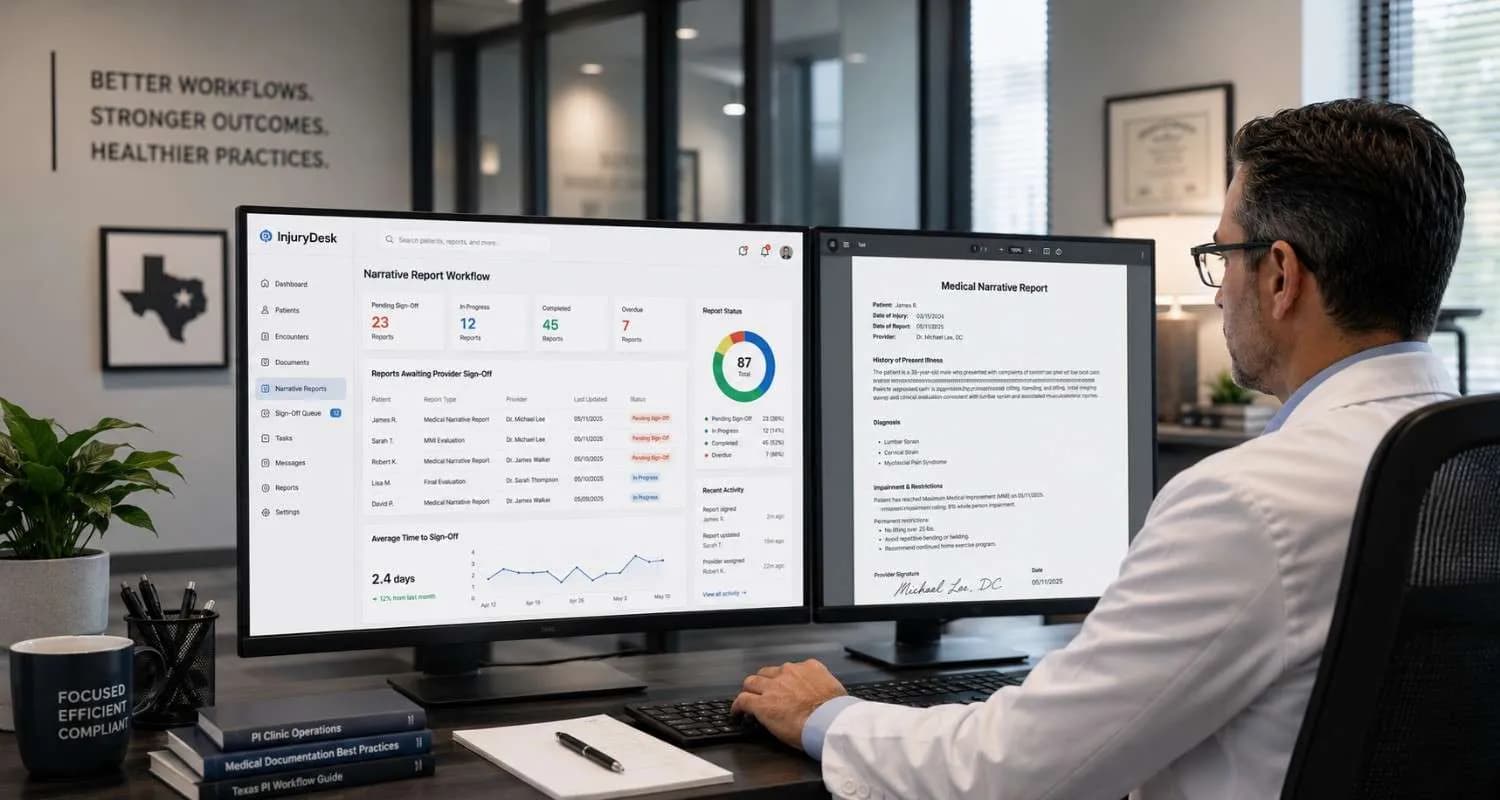

The healthcare landscape in Houston, TX, is unlike any other. With the massive presence of the Texas Medical Center and over 19,000 licensed physicians competing and collaborating, efficiency isn’t just a goal—it’s a requirement for survival and growth. To thrive in this demanding, high-volume environment, medical clinics must streamline their entire operation.
This is where Practice Management Software Medical (PMS) becomes mission-critical. The right PMS directly impacts your clinic’s efficiency, revenue cycle, patient satisfaction, and competitive advantage in Houston’s demanding healthcare environment. It’s the central nervous system for your administrative and financial operations.
This comprehensive guide will walk Houston-area medical practices through the essential factors you must consider when selecting your next PMS. You’ll learn about specialty considerations, practice size requirements, non-negotiable key features like scheduling, billing, and EHR PMS Integration, cost factors, and how to effectively compare your options. For a broader look at the systems that support your administrative team, explore our insights on comprehensive backoffice solutions for Healthcare Practices.
In a market defined by diverse patient populations and competitive complexity, like the one surrounding the Texas Medical Center, your choice of Practice Management Software Medical is arguably the most strategic decision you’ll make for your practice’s future.
Understanding Practice Management Software for Medical Clinics
Practice Management Software (PMS) is a category of healthcare software designed to automate and manage the administrative and financial aspects of a medical clinic. Its core purpose is to optimize the workflow of front-office and billing staff, enabling them to handle the high patient volumes typical of practices in the Houston area with greater accuracy and speed.
It’s important to understand that PMS handles the business side, while an Electronic Health Record (EHR) focuses on the clinical side patient charts. However, in modern healthcare, the two must integrate seamlessly, giving providers and staff a unified patient record.
The primary functions a robust Clinic Management Software handles include: scheduling, patient registration, insurance claims processing, medical billing, payment posting, and financial reporting.
For Houston practices, where high patient volumes and administrative complexity are common, PMS isn’t optional—it’s the essential infrastructure that allows you to maintain high-quality patient care while ensuring fiscal health. This is an essential industry standard in modern healthcare.
Key Factors to Consider When Selecting Practice Management Software
Selecting the optimal Practice Management Software Medical requires careful evaluation across multiple dimensions. We’ll preview the key factors you must address: specialty fit, practice size, essential features, integration capabilities, and total cost.
Your Practice Specialty and Clinical Workflows
The reality is that one size rarely fits all. Your medical specialty dictates unique workflow, coding, and documentation needs that must be supported by your Clinic Management Software.
For instance, cardiology practices need different coding and multi-phase billing than pediatric clinics. Oncology centers require software that handles complex, multi-stage treatment plans. Mismatched specialty software leads directly to workarounds and inefficiency. Considering Houston’s diverse specialty landscape—from Texas Medical Center specialists to neighborhood family practices—you must ensure the software provides specialty-specific templates and workflow customization.
Practice Size and Scalability Requirements
The size of your practice—whether you’re a solo practitioner, a small group, or a large, multi-location group—significantly impacts your PMS needs.
Scalability is crucial; the software should grow with you adding providers, locations, users. Outgrowing your system creates expensive migration challenges. Solo and small practices often prioritize affordable, user-friendly solutions. Larger practices require advanced user permissions, robust multi-location support, and comprehensive reporting. Since the Houston market includes both solo practitioners and large multi-specialty groups near the Texas Medical Center, factor in your five-year growth plan when choosing your Practice Management Software Medical.
Essential Software Features for Medical Practices
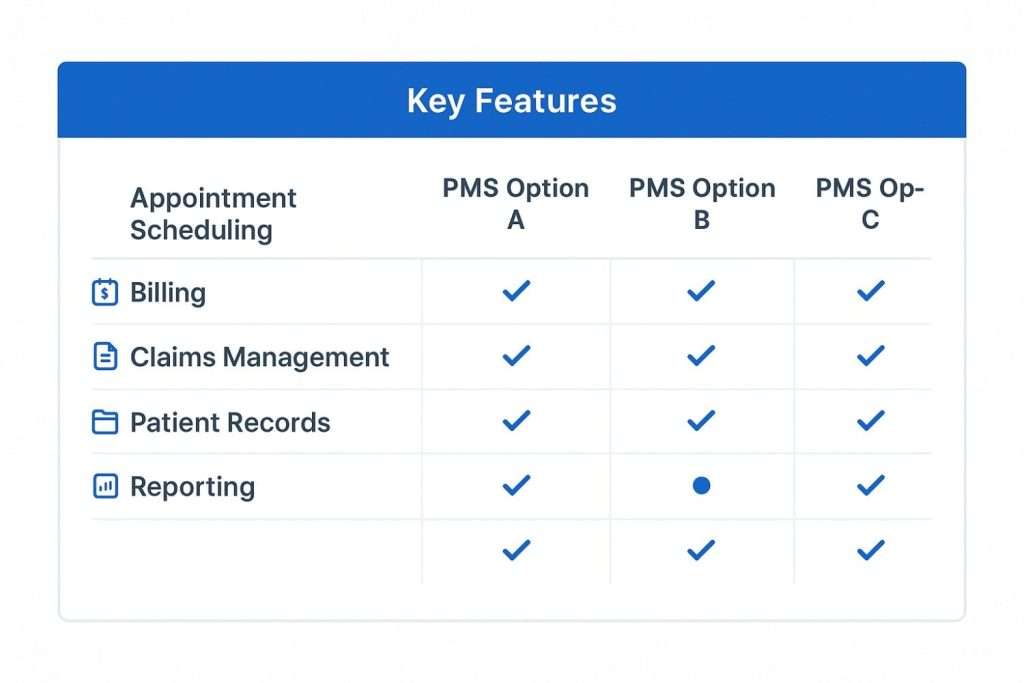
Certain core capabilities in any Best PMS Healthcare solution are non-negotiable.
Appointment Scheduling and Calendar Management
A sophisticated scheduler is the engine of your front office. Look for online patient booking, automated SMS/email reminders, real-time availability, and waitlist management. These features drastically reduce no-show rates and improve patient satisfaction. For a more in-depth solution for managing patient interactions, consider dedicated appointment scheduling services. Houston’s diverse patient base may also benefit from a Clinic Management Software with multilingual appointment confirmations.
Medical Billing and Claims Management
This function is critical for your practice’s cash flow. Top features include automated claims submission, instant insurance eligibility verification, electronic payment posting, and denial management. Automation here is essential to speed up reimbursement and minimize errors, as billing errors can cost practices significant sums annually. Prioritize a system with robust integration to clearinghouses and that can handle your payer mix, including Texas Medicaid. For professional handling of your revenue cycle, explore our medical billing and coding services. Choosing a Best PMS Healthcare solution means choosing top-tier billing capabilities.
EHR Integration and Clinical Documentation
Seamless EHR PMS Integration is vital for accuracy and efficiency. This connectivity ensures that billing codes match clinical documentation, eliminating duplicate data entry and preventing costly claim denials. Look for built-in EHR or third-party integration via standards like HL7/FHIR. Integrated systems achieve higher coding accuracy. This is especially important for Houston practices coordinating care with specialists across the Texas Medical Center. For more on managing this crucial data, check out our patient records management.
Reporting and Analytics Capabilities
The Best PMS Healthcare solutions provide customizable dashboards and reports covering financial A/R, collections, operational patient volume, no-show rates, and clinical quality metrics. This data-driven decision-making is essential for identifying bottlenecks and optimizing revenue, allowing Houston practices to stay competitive in a crowded market.
Comparing Practice Management Software Options
You must systematically compare vendors by evaluating feature completeness, ease of use, vendor reputation/support, implementation timeline, and training requirements. Create a comparison matrix with must-have vs. nice-to-have features. Suggest requesting demos and speaking with current users in similar specialties, perhaps seeking references from other Texas Medical Center area practices. Consider vendor stability and their software roadmap when selecting the right Practice Management Software Medical to prevent costly implementation failures.
Understanding Practice Management Software Costs
Most modern Practice Management Software Medical options are cloud-based with a subscription model $10 to $1,000/month per provider is a typical range. Break down the Total Cost of Ownership (TCO) over 3–5 years, including software fees, implementation/setup, training, ongoing support, and data migration.
Beware of hidden costs like per-claim fees or additional user charges. Ultimately, cost must be weighed against ROI, as practices typically see a significant improvement in collections and reduced administrative overhead with the right Best PMS Healthcare solution. Houston practices should also factor in local IT support availability for any on-premise components.
Implementation and Integration Considerations
The implementation process involves data migration, configuration, staff training, and a detailed go-live plan. You must ensure seamless EHR PMS Integration and connectivity with existing systems like labs, imaging, and accounting software. The typical timeline is 4–12 weeks.
Staff buy-in and adequate training time are paramount to success—research shows providing learning time dramatically improves success. For ongoing administrative support, you can rely on our backoffice support services. Houston practices must also ensure HIPAA compliance is maintained throughout the entire transition.
Choosing the Right Software for Your Houston Medical Practice
Provide actionable steps: assess current pain points, define must-have features, involve key stakeholders providers, billing staff, front desk, request demos, and check references. The “right” Practice Management Software Medical is not one-size-fits-all; it must match your unique practice needs and growth plans.
Houston’s competitive landscape requires practices to leverage every efficiency advantage, making the selection of Clinic Management Software a critical strategic choice. Practices that make software comparisons and consider prior user testimony are more likely to perceive improvements. Investing in appropriate PMS is an investment in your practice’s long-term success.
Conclusion
Selecting Practice Management Software Medical is a strategic decision requiring evaluation of specialty fit, size/scalability, essential features scheduling, billing, EHR PMS Integration, reporting, cost/ROI, and implementation support.
The right PMS is a transformative force: it modernizes your clinic’s operations, improves your revenue cycle, and provides a competitive advantage. Houston medical practices must carefully match software capabilities to their specific workflows and growth plans.
Find the Right Software: Explore our backoffice solutions.
Next step
See how Synectus closes the handoff after the lead arrives.
If this article describes the exact gap inside your clinic, go one layer deeper into the service stack or book a direct strategy call with Synectus.